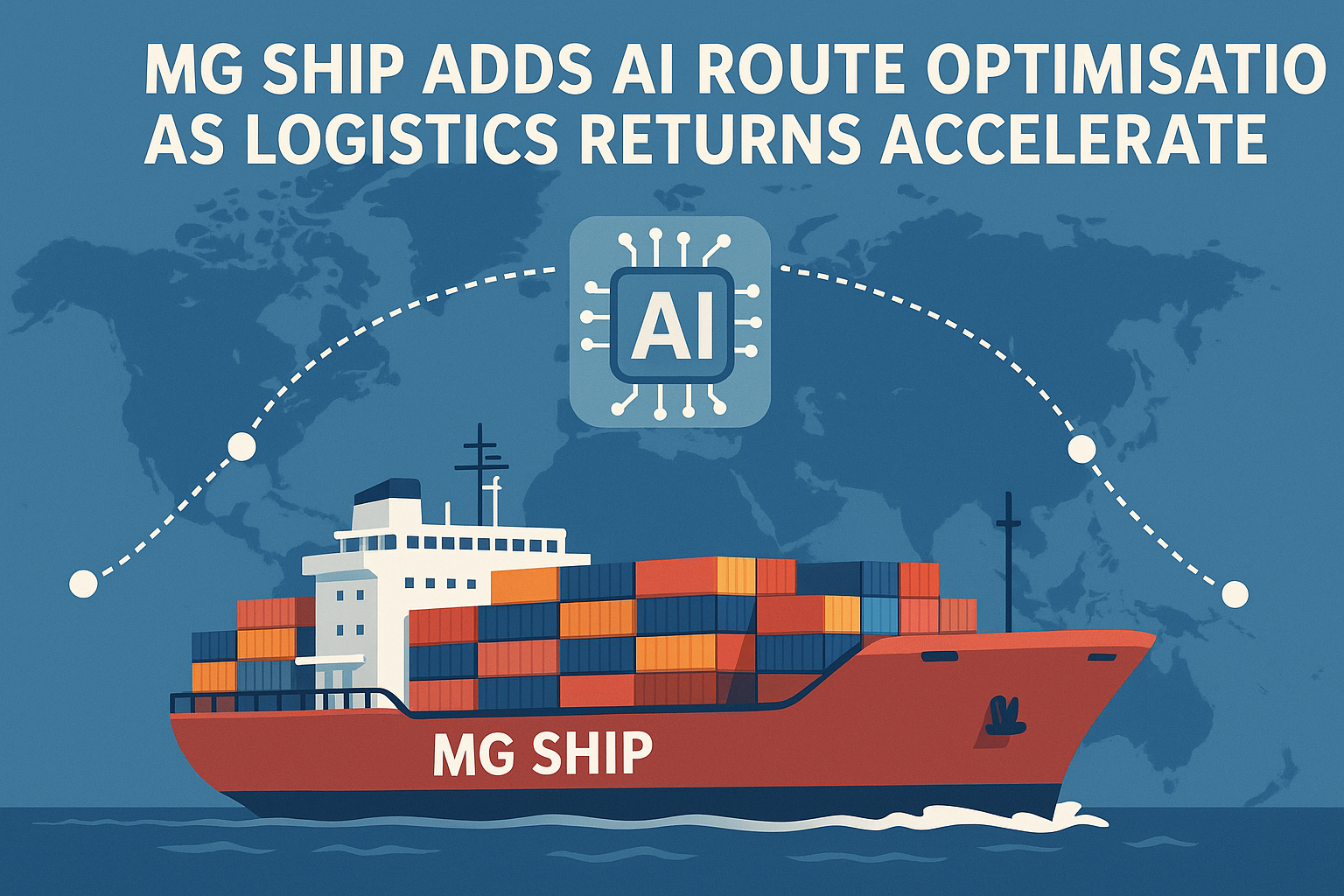
## MG Ship Adds AI Route Optimisation as Logistics Returns Accelerate
MG Ship has introduced a new AI-powered route optimisation and carrier selection module designed to help global retailers and commercial shippers improve the speed, cost efficiency, and reliability of international logistics operations.
The new technical module combines automated routing algorithms with intelligent carrier recommendation systems, enabling businesses to make faster and more informed shipping decisions across global trade corridors. As supply chains continue to face pressure from fluctuating transport costs, port congestion, geopolitical disruption, and rising customer expectations, tools that improve visibility and decision-making are becoming increasingly important.
### AI-Powered Logistics Decision-Making
MG Ship’s latest module is aimed at enterprise supply chain teams that manage complex international shipments involving multiple routes, carriers, and service levels. Instead of relying solely on manual planning or static freight rules, the system uses AI to evaluate available shipping options and recommend routes and carriers based on key operational factors.
These may include transit time, cost, carrier performance, route reliability, and shipment requirements. By automating part of the decision-making process, the platform can help logistics teams reduce delays, avoid inefficient routes, and select carriers that best match their business priorities.
### Reducing Costs and Improving Transit Times
The launch comes as logistics deployments using artificial intelligence are beginning to show rapid returns in both cost and time savings. For retailers and shippers, even small improvements in route planning can have a significant impact when applied across large shipment volumes.
AI-based route optimisation can help companies identify more efficient trade lanes, reduce unnecessary handling, and respond more quickly to disruptions. Carrier selection tools can also support better procurement and operational planning by highlighting providers with stronger performance on specific routes.
As global commerce becomes more complex, businesses are increasingly looking for technology that can provide real-time insights and help them adapt quickly. MG Ship’s new module reflects this growing demand for AI solutions that move beyond basic tracking and into active logistics optimisation.
### Supporting Global Retailers and Commercial Shippers
For global retailers, shipping performance directly affects inventory availability, delivery promises, and customer satisfaction. Delays or inefficient carrier choices can lead to stock shortages, higher costs, and missed sales opportunities.
Commercial shippers face similar challenges, especially when moving goods across international borders where lead times, customs processes, and carrier reliability can vary significantly. An AI-driven system can support these organisations by improving planning accuracy and helping teams choose the most effective logistics options for each shipment.
### AI’s Expanding Role in Supply Chains
MG Ship’s announcement highlights a wider trend in the logistics industry: the growing adoption of AI to improve supply chain resilience and performance. Companies are no longer using AI only for forecasting or warehouse automation. Increasingly, they are applying it to transport planning, freight procurement, route selection, and risk management.
With supply chain operators reporting measurable operational gains from AI deployments, route optimisation is becoming one of the clearest use cases for the technology. The ability to reduce costs, improve delivery times, and make better carrier choices offers immediate value in a sector where margins and timing are critical.
### A Step Toward Smarter International Shipping
MG Ship’s AI route optimisation and carrier selection module positions the company within a fast-growing segment of logistics technology focused on intelligent automation. By helping shippers evaluate complex transport options more efficiently, the module has the potential to improve both operational performance and strategic supply chain planning.
As logistics networks continue to evolve, AI-driven tools like this are likely to become a standard part of global shipping operations, helping companies respond faster, spend smarter, and deliver more reliably.
Leave a Reply