## Gartner: Warehouse Automation Moves From Trials to Real-World AI Deployment
Warehouse automation is no longer just a future-focused experiment. According to a recent Gartner analysis, logistics operators are now moving beyond software pilots and limited trials into live facility deployments powered by artificial intelligence.
The research firm reports that warehouse automation has reached a clear adoption threshold, with AI increasingly becoming part of daily logistics operations. Rather than being used only for isolated tasks, AI is now being applied across multiple operational layers of the warehouse, helping companies improve productivity, respond to labor shortages, and manage growing supply chain complexity.
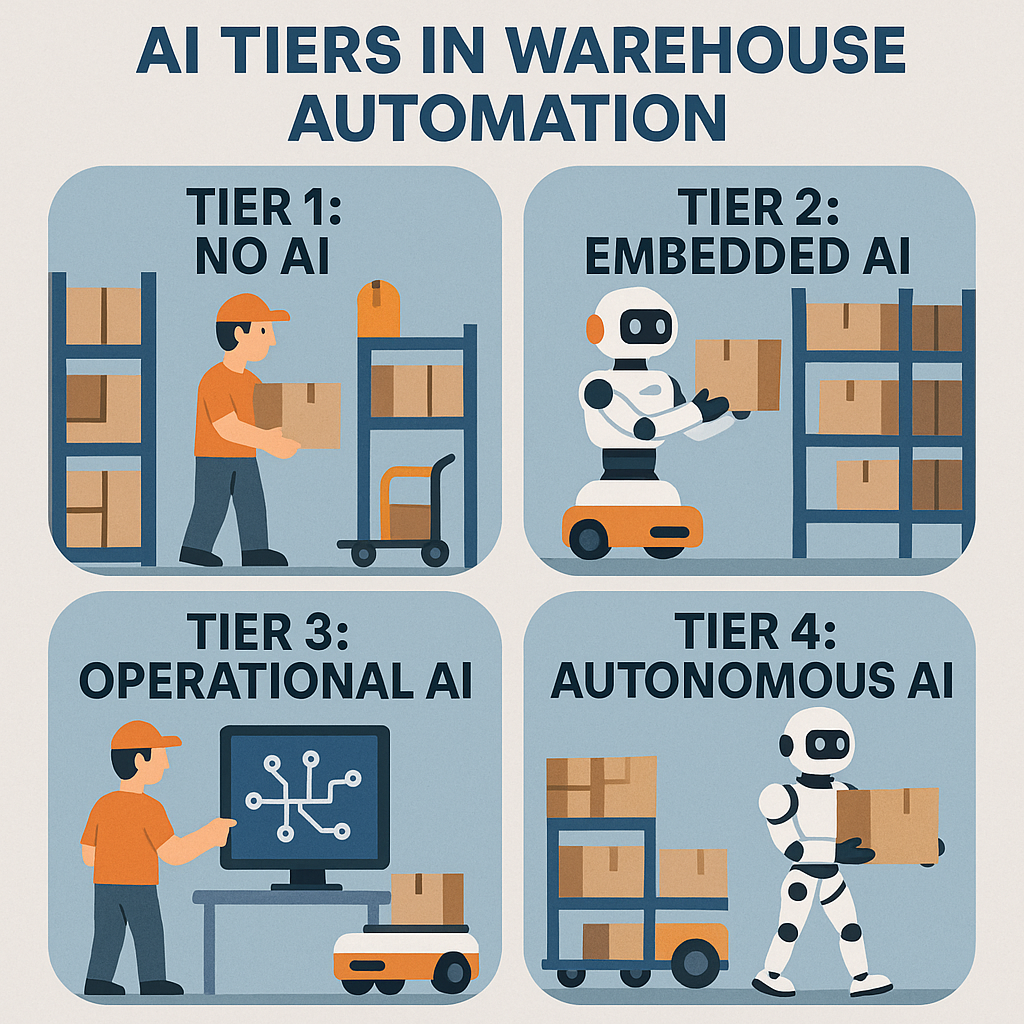
### Four AI Tiers Are Emerging in Warehouse Automation
Gartner identifies four operational AI tiers shaping the next phase of warehouse automation. These tiers reflect the growing maturity of AI in logistics environments, from basic decision support to more advanced autonomous systems.
At the lower levels, AI may support workers and managers by improving forecasting, task planning, inventory visibility, and workflow decisions. These tools help warehouse teams make faster and more accurate operational choices.
At more advanced levels, AI becomes deeply connected to physical automation. This includes robotics, automated picking systems, autonomous mobile robots, and intelligent warehouse execution platforms that can adjust activity in real time. In these environments, AI is not simply analyzing data — it is actively coordinating movement, labor, machines, and inventory across the facility.
The highest tiers point toward increasingly autonomous warehouse operations, where systems can learn from changing conditions and optimize performance with limited human intervention.
### Labor Shortages Are Accelerating Adoption
One of the biggest forces behind this shift is the persistent shortage of warehouse workers. Logistics companies continue to face difficulty recruiting and retaining labor, especially for physically demanding and repetitive roles.
Automation offers a way to reduce dependency on manual labor while improving consistency and throughput. AI-powered systems can support existing employees by taking over repetitive tasks, reducing walking time, improving picking efficiency, and helping supervisors allocate resources more effectively.
Rather than replacing the workforce entirely, many companies are using AI and automation to make warehouse jobs more productive and less physically intensive.
### From Pilot Projects to Live Deployments
For years, many warehouse automation projects remained in the testing stage. Companies experimented with robotics, AI-driven software, and warehouse management tools, but often limited them to small-scale trials.
Gartner’s analysis suggests that the market has now entered a more mature phase. Logistics operators are increasingly confident that AI-driven automation can deliver measurable benefits in real warehouse environments.
This shift is important because live deployments require more than promising technology. They demand integration with warehouse management systems, reliable data, trained staff, and clear operational goals. The move from trials to full deployment shows that AI is becoming a practical tool for logistics transformation.
### Why This Matters for the Logistics Industry
The rise of AI tiers in warehouse automation reflects a broader change in supply chain strategy. Warehouses are under pressure to move goods faster, operate with fewer errors, and respond to changing customer expectations.
E-commerce growth, same-day delivery demands, supply chain volatility, and cost pressures are forcing companies to rethink traditional warehouse operations. AI gives logistics operators a way to create more flexible, responsive, and scalable facilities.
By using AI to optimize inventory flow, labor planning, equipment usage, and order fulfillment, warehouses can become more resilient and efficient.
### The Future of AI-Driven Warehousing
As AI adoption continues, warehouse automation is likely to become more connected and intelligent. Future facilities may rely on AI platforms that coordinate human workers, robots, conveyors, inventory systems, and transportation networks in real time.
However, successful adoption will depend on more than installing new technology. Companies will need strong data foundations, clear implementation strategies, cybersecurity safeguards, and workforce training programs.
Gartner’s findings signal that warehouse automation has entered a new stage. AI is no longer just an experimental add-on — it is becoming a core part of modern logistics infrastructure.
For logistics operators, the message is clear: the future warehouse will be increasingly intelligent, automated, and adaptive. Companies that invest early in scalable AI systems may gain a significant advantage in efficiency, cost control, and service performance.
Leave a Reply