## Nvidia’s AI Boom Raises Questions Over “Circular” Financing
Nvidia’s dominance in artificial intelligence is increasingly being powered not only by demand for its chips, but also by its own financial backing of the companies buying them.
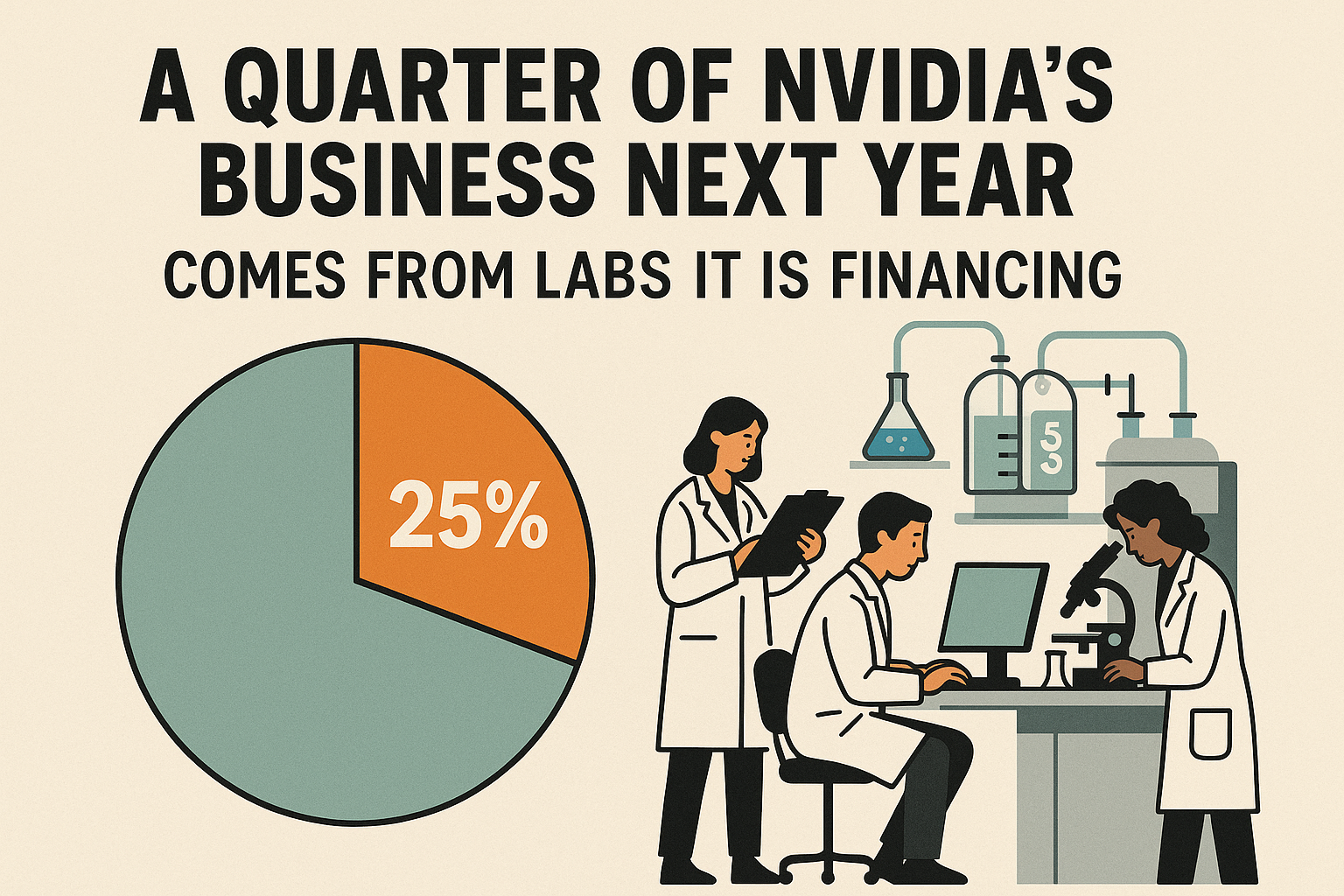
According to recent comments from Nvidia chief financial officer Colette Kress, AI labs that have received financing or investment support from Nvidia are expected to account for roughly a quarter of the company’s business next year. The figure highlights how deeply Nvidia has embedded itself in the AI ecosystem — not just as the leading supplier of high-performance GPUs, but also as a major financial supporter of the companies building large AI models and data centres.
Reports indicate that Nvidia has put nearly **US$50 billion** into AI labs and related companies that purchase its chips. At the same time, the company has lined up more than **US$500 billion in commitments**, reflecting the massive scale of infrastructure spending now taking place across the AI industry.
### Why Nvidia Is Financing AI Labs
The strategy is easy to understand. AI labs need enormous computing power to train and run advanced models. Nvidia’s GPUs are currently the most sought-after hardware for this work, but the cost of building AI infrastructure is extremely high. By investing in or financing key customers, Nvidia helps ensure that these companies can continue buying its chips at scale.
This creates a powerful growth loop: AI companies receive capital to expand, they use that capital to purchase Nvidia hardware, and Nvidia benefits from rising chip sales. In a market where demand for AI computing continues to outstrip supply, this approach gives Nvidia greater influence over the future direction of the industry.
### The Circular Financing Concern
However, the model also raises concerns. Critics describe this as a form of “circular financing,” where Nvidia’s investments may help generate demand for its own products. In simple terms, Nvidia gives money or financial support to AI companies, and those companies then spend heavily on Nvidia chips.
While this does not necessarily mean the demand is artificial, it does make the market harder to assess. Investors may question how much of Nvidia’s revenue growth is coming from independent customer demand and how much is linked to companies financially supported by Nvidia itself.
If a large portion of future sales depends on Nvidia-backed customers, the company could become more exposed to the financial health of those AI labs. If any of them struggle to turn AI development into sustainable revenue, their ability to keep buying chips could weaken.
### A Sign of AI’s Massive Infrastructure Race
The news also shows how expensive the AI race has become. Training advanced models and deploying AI services require huge amounts of computing capacity, electricity, data centre space, and specialised hardware. Nvidia sits at the centre of this transformation because its chips are essential to much of today’s AI development.
The more AI companies compete to build larger and more capable models, the more they rely on Nvidia’s products. This has helped push Nvidia into one of the most valuable positions in the global technology sector.
### Investor and Market Implications
For Nvidia investors, the company’s financing activity presents both opportunity and risk.
On one hand, Nvidia is strengthening its ecosystem and helping accelerate AI adoption. By supporting the companies that rely on its technology, it may secure long-term demand and deepen customer relationships.
On the other hand, the scale of the financing raises questions about revenue quality, concentration risk, and whether the AI infrastructure boom can continue at its current pace. If expectations around AI profits fail to materialise, some customers may reduce spending, potentially affecting Nvidia’s future growth.
### The Bigger Picture
Nvidia’s role in AI is no longer limited to selling chips. It is now acting as a strategic financier, ecosystem builder, and infrastructure enabler for the broader AI industry.
That position gives Nvidia enormous influence, but it also places the company at the centre of a debate about whether the AI boom is being driven by genuine market demand or by a self-reinforcing cycle of investment and spending.
For now, demand for Nvidia chips remains extremely strong. But as a significant share of future business appears tied to companies it has financed, the market will be watching closely to see whether this strategy creates lasting growth — or exposes Nvidia to new risks as the AI industry matures.
Leave a Reply